Catalunya does not really have a festival season. It has a festival year. Between the winter parades and the autumn chestnuts, almost every week brings a street party, a procession, a food fair, or a night when the whole town turns out with fire and music. If you are planning a trip and want to see the region at its liveliest, 2027 is a great year to go.
This guide to Catalunya festivals in 2027 goes through the calendar month by month. It covers the big names, such as Sant Jordi, La Mercè and Santa Tecla, and a few smaller local events that are worth knowing about. Where a date has been confirmed, we say so. Where it has not, we explain when the festival normally takes place so you can plan sensibly and check again closer to the time.
Why Visit Catalunya During Festival Season?
Most visitors come to Catalunya for the beaches, the food and the architecture, and those are all good reasons. But the region feels different when a festival is on. Streets that are normally busy with traffic fill up with dancers, drummers, and families carrying folding chairs. You see how Catalans actually celebrate, and it is rarely a polite, quiet affair.
Discover Catalan traditions beyond the tourist trail.
Many Catalan festivals started as local religious or farming events and are still run by neighbourhood groups, cultural associations and volunteers. That is why they feel genuine. A festa major in a small town might have a few hundred people at the main square, a local band, a casteller colla and a very long lunch. You do not need a ticket or a guide. You just need to turn up and stand where the locals stand.
Experience local food, music, dance and street celebrations.
Food is part of nearly every celebration here. In January you might eat calçots at a long table, in April you buy a book and a rose, in June you share a sweet coca at midnight, and in November you buy hot chestnuts from a street stall. Music ranges from the traditional cobla bands that play for the sardana to big open-air concerts that fill Barcelona’s squares and parks in summer.
The best seasons for festival travel
Spring and early autumn are the sweet spot. April, May and June give you mild weather, flowers and long evenings. September is probably the single richest month for culture, with the National Day, La Mercè and Santa Tecla all arriving within a few weeks of each other. Winter is quieter and cheaper, and the Christmas traditions are charming. August is hot, but it is also when the neighbourhood festivals of Barcelona are at their most colourful.
Catalunya Festivals 2027 Calendar at a Glance
Here is a quick summary of the main events. Dates marked as confirmed come from the date of a saint’s day, a fixed holiday, or the Easter calendar. Dates marked as expected are based on previous years, and you should check with the organisers before booking anything that cannot be refunded.
| Month | Festival | Location | Timing in 2027 |
|---|---|---|---|
| January | Cavalcada de Reis | Towns across Catalunya | 5 January, evening (confirmed) |
| January | Sant Antoni and the Tres Tombs | Many towns and cities | Around 17 January (expected) |
| February | Sitges Carnival | Sitges | Around 4 to 9 February (expected) |
| February | Vilanova i la Geltrú Carnival | Vilanova i la Geltrú | Early to mid February (expected) |
| March | Setmana Santa | Towns across Catalunya | 21 to 28 March; Easter Sunday is 28 March (confirmed) |
| April | Sant Jordi | Across Catalunya | 23 April (confirmed) |
| May | Girona Temps de Flors | Girona | 8 to 16 May (listed by a festival calendar, verify) |
| May | Corpus Christi and L’ou com balla | Barcelona and other towns | Around 27 May (expected) |
| June | Revetlla de Sant Joan | Across Catalunya | Night of 23 June (confirmed) |
| July | Grec Festival | Barcelona | Early July into the summer (expected) |
| August | Festa Major de Gràcia | Barcelona | Mid-August (expected) |
| August | Festa Major de Sants | Barcelona | Late August (expected) |
| September | La Diada | Across Catalunya | 11 September (confirmed) |
| September | Festes de la Mercè | Barcelona | Around 24 September (to be confirmed) |
| September | Santa Tecla | Tarragona | Around 23 September (expected) |
| October | Fires de Sant Narcís | Girona | Late October (expected) |
| November | La Castanyada | Across Catalunya | 31 October and 1 November |
| December | Christmas markets and Caga Tió | Barcelona, Girona and beyond | December (expected) |
Catalunya Festivals in January 2027
January is quiet in terms of tourists but not in terms of tradition. The Christmas period in Catalunya lasts until Epiphany, and then the focus shifts to saints, animals and street processions.
Three Kings Parade (Cavalcada de Reis)
On the evening of 5 January, the Three Wise Men arrive in towns and cities all over Catalunya. In Barcelona, they come by boat into the old port, are welcomed by the mayor, and then ride through the streets on huge floats while helpers throw sweets to the crowd. Children bring shoes and letters, and parents try to get everyone to bed early so the kings can leave presents. The next day, 6 January, families sit down together for the tortell de Reis, a ring-shaped cake with a small figure and a bean hidden inside. Whoever finds the bean pays for the cake.
If you have children, the Cavalcada is one of the most magical nights of the year. Arrive early, because the best spots along the route fill up well before the floats appear. Smaller towns often have a more relaxed version where it is easier to get close.
Sant Antoni celebrations and the Tres Tombs
Around 17 January, many towns celebrate Sant Antoni Abat, the patron saint of animals. The tradition is called the Tres Tombs, which means the three laps, and it involves horses, carts, mules, and sometimes dogs and other pets walking three times around a central route. The animals are blessed, and afterwards there is usually food and music. In Barcelona, the Sant Antoni neighbourhood, home to the old market, hosts one of the best-known versions. In rural towns, you are likely to see working horses and proper farm carts.
Winter traditions, local markets and seasonal food
January is the time for calçots, the long spring onions grilled over open fire and dipped in romesco sauce. The season is usually at its best from January to March, and many restaurants in the countryside around Valls and Tarragona hold calçotades at weekends. It is messy; you wear a bib, and it is great fun. Winter markets also sell escudella, the hearty Catalan stew, and plenty of local cheese and cured meats.
Catalunya Festivals in February 2027
February is Carnival month, and in 2027 it falls earlier than usual because Easter is on 28 March. Ash Wednesday is on 10 February, so the main parades will happen in the days just before.
Sitges Carnival
Sitges has one of the best-known carnivals in Spain, and it is famous for its costumes, glitter and open-minded atmosphere. The celebrations usually start on the Thursday before Ash Wednesday, known as Dijous Gras, and build up to two big parades, the Sunday one and the Tuesday one. Expect elaborate floats, dancing in the streets, and costumes that have taken months to make. It is a very popular weekend, and Sitges is small, so accommodation fills quickly.
Vilanova i la Geltrú Carnival
Just along the coast, Vilanova i la Geltrú has a carnival with a very different feeling. It is known for its long traditions, its satirical street theatre and some unusual rituals, including the Merengada, a famous sweet and messy battle with a long history. Many locals see it as the more authentic alternative to Sitges, with less polish and a lot more mischief. The two towns are only a short train ride apart, so you can visit both if you plan the dates carefully.
Carnival food, costumes and street parades
Carnival food in Catalunya is simple and filling. On Dijous Gras it is traditional to eat a tortilla with botifarra sausage, and you will also find botifarra d’ou, a local sausage made with egg. Sweet treats include coca de llardons and fried pastries. If you want to join in, you do not have to buy an expensive costume. A wig, some face paint or a funny hat is enough to blend in.
Catalunya Festivals in March 2027
March is a good month to visit if you prefer fewer crowds. Weather can be mixed, but spring is starting to arrive, and prices are still lower than in summer. In 2027, Holy Week falls entirely in March, so you can combine early spring sightseeing with some striking religious processions.
Festa de la Llum in Manresa, where relevant to the calendar
The Festa de la Llum in Manresa celebrates the opening of the Sèquia canal, which brought water to the city in the fourteenth century. It is usually held around the end of February, so it may fall just before March in your travel plans. The festival includes a historical recreation, light shows, and a street market, and the old town takes on a medieval look. If you are visiting at the turn of the month, it is a lovely day trip from Barcelona by train.
Early spring cultural events and local fairs
March is also the time of year when local fairs start up again after winter. Many towns hold craft markets, farm fairs and food days, and they give you a taste of everyday rural life. Calçots are still in season, and some towns celebrate them with festivals and tastings.
Where to enjoy Catalunya before the busy season
If you want museums, restaurants and old streets without queues, March is excellent. Girona, Tarragona and Vic are all pleasant at this time of year, and you can wander the old quarters comfortably. Holy Week, which runs from Palm Sunday on 21 March to Easter Sunday on 28 March, brings processions in towns such as Girona, Tarragona and Verges. The most famous in Catalunya is the Dansa de la Mort in Verges, a nighttime procession with dancing skeletons on Maundy Thursday. Easter Monday, 29 March, is also a local holiday in Catalunya, and families traditionally eat the mona de Pasqua, a cake decorated with chocolate and eggs, which godparents give to their godchildren.
Catalunya Festivals in April 2027
April is the month of Sant Jordi, and for many people it is the best day of the Catalan year.
Sant Jordi Day: Books, Roses and Romance
On 23 April, which falls on a Friday in 2027, the streets of Catalunya fill with book stalls and rose sellers. The custom is for people to give a rose to someone they love, and to receive a book in return. The legend behind it is the story of Saint George, who killed a dragon and saved a princess, and a rose bush grew from the dragon’s blood. It is also World Book Day, so authors sit at stalls signing copies, and the busiest areas, such as Rambla de Catalunya and Passeig de Gràcia in Barcelona, can be very crowded by midday.
If you are in Barcelona on Sant Jordi, go early, buy a rose from a stall and take your time browsing. It is not a public holiday, so people are working, but the mood in the city is joyful. Many bookshops stay open late, and the Palau de la Generalitat usually opens its doors to the public on the day, which is a rare chance to see inside.
Easter Week and the Processions of Setmana Santa
Because Easter is early in 2027, most Setmana Santa events happen in March rather than April. If you are travelling at the very start of April, you might still catch the tail end of Easter customs in some places, but the main processions will be done by then.
Spring food fairs and local celebrations
April is full of food and drink fairs. Cheese festivals, wine tastings, artichoke days and cherry fairs begin to appear across the region, particularly in rural areas. The weather is pleasant enough for outdoor lunches, and many towns hold open-air markets on weekends. It is a good month to take a slow drive through the countryside, stopping wherever a village has something on.
Catalunya Festivals in May 2027
If there is one month to see Catalunya at its prettiest, it is May. Flowers are everywhere, the sun is warm, and the summer crowds have not arrived yet.
Girona Temps de Flors:
Temps de Flors turns Girona into a huge open-air garden. Courtyards, cloisters, staircases, bridges and old streets are filled with flower installations, many in places that are closed to the public for the rest of the year. A festival calendar lists the 2027 edition as 8 to 16 May, which would make it a nine-day event, but you should confirm the exact dates with the organisers or the Girona tourist office before booking.
The best way to enjoy it is on foot. Start in the old Jewish quarter, climb towards the cathedral and follow the signs between installations. Go early in the morning or after dinner for fewer people, and expect the busiest crowds on the weekends. Photographers love it, and it is also an easy trip from Barcelona by train, though staying overnight in Girona lets you see more.
Corpus Christi traditions and the Dancing Egg, where dates align
In 2027, Corpus Christi falls on Thursday 27 May. In Barcelona and several other towns, the cathedral cloister hosts the strange and charming tradition of L’ou com balla, the dancing egg. An empty eggshell is placed on top of the water jet of a fountain, and it spins and bobs without falling. The custom goes back centuries, and the fountains are decorated with flowers and cherries. In Sitges, Corpus is marked by carpets of flowers laid in the streets, often with elaborate designs. Dates and details vary by town, so check local listings.
Local spring fairs and outdoor cultural events
May is also busy with local festivals and open-air events. Many towns hold their own flower fairs and village fêtes, and the Night of Museums, which usually takes place in mid-May, opens many museums for free in the evening. Music festivals begin to get going too, with Primavera Sound traditionally held in Barcelona at the end of May or in early June. Check the programme if live music is a priority.
Catalunya Festivals in June 2027
June is when Catalunya moves outdoors. Evenings stretch, beaches fill, and the whole region prepares for the midsummer night.
Revetlla de Sant Joan: The Night of Fire
The night of 23 June, the eve of Saint John, is one of the most exciting nights of the year. Bonfires are lit on beaches and in squares, fireworks go off in every direction, and people stay out until morning. In Barcelona, Barceloneta and the other city beaches fill with groups of friends, picnics, music, and fire. In the Pyrenees, the Flama del Canigó is carried down from the mountain and used to light bonfires across the country. Families eat coca de Sant Joan, a flat sweet pastry topped with candied fruit and pine nuts, often with cava.
A few practical points. Fireworks are loud and sometimes close to the crowd, so keep children near you and stay clear of the main blasts. Public transport runs late but gets very crowded. Following local rules about fire and alcohol on the beach is sensible, as police patrols are common.
Corpus Christi celebrations
Because Corpus Christi falls on 27 May 2027, the main celebrations will be at the end of May rather than in June. That includes the Patum of Berga, which takes place around Corpus and is on the UNESCO list of Intangible Cultural Heritage. It is an extraordinary experience with fire, drums and masked creatures, and worth planning a late May trip around if you can.
Summer music festivals and open-air events
June is a big month for music. Barcelona has several large festivals, and smaller towns hold concerts in squares, castles and gardens. The Grec Festival, the city’s main performing arts festival, usually opens in late June or early July and brings theatre, dance and music to venues across Montjuïc and the city centre. Beach bars and rooftop terraces run live sets, and local radio stations announce free concerts almost every weekend.
Catalunya Festivals in July 2027
July is hot, bright and full of life. The calendar is packed with open-air performances, village festivals and long summer nights.
Festa Major de Sant Feliu in selected towns, where applicable
Many Catalan towns hold their own annual festa major, the main local festival, usually around the day of their patron saint. Sant Feliu de Guíxols, on the Costa Brava, holds its festa major around the end of July into early August, with concerts, processions, fireworks and sea-based events. Other towns do the same at different times, and each one has its own character. The best way to find them is to check the local tourist office website for the area you are visiting.
Grec Festival and Barcelona’s summer arts scene
The Grec Festival is one of Barcelona’s most important cultural events of the summer. It uses venues around Montjuïc, including the Teatre Grec, an open-air amphitheatre that gives the festival its name. The programme covers theatre, music, dance, circus and contemporary performance, with international and local artists. Exact dates and the lineup for 2027 are normally announced in spring, so keep an eye out for the programme.
Outdoor concerts, village festivals and coastal celebrations
Along the coast you will find sea festivals, boat processions and fishermen’s celebrations. On 16 July, many ports celebrate the Virgen del Carmen, patron of sailors, with decorated boats and a procession on the water. Inland, music festivals take place in castles, vineyards and squares. Evening concerts with a view of the hills are a very Catalan way to spend a summer night.
Catalunya Festivals in August 2027
August is hot, and many locals leave the city, but it is also the month of the festes majors in Barcelona’s neighbourhoods, which are among the most colourful events of the year.
Festa Major de Gràcia in Barcelona
The Festa Major de Gràcia takes place in the middle of August and is famous for its decorated streets. Neighbours spend months making elaborate decorations out of recycled materials, paper, plastic and cardboard, and each street competes for a prize. The result is a tunnel of colour in the middle of the city. There are concerts in the squares, street dinners, children’s activities and plenty of late-night dancing. The official dates for 2027 should be confirmed by the neighbourhood organisers, but it usually runs for about a week around 15 August.
Festa Major de Sants
Sants holds its own festa major in the second half of August, and it also competes for the best decorated streets. It has a slightly more local and less touristy feel than Gràcia, with live music, community events and traditional dances. If you want to see the Gràcia decorations and then compare, visiting both is easy by metro.
Traditional gegants, castellers and neighbourhood parties
During both festivals, you can expect to see the gegants, huge painted figures carried by dancers, as well as capgrossos, which are characters with enormous heads. Castellers, the human tower builders, often perform in the main squares. The mood is communal and friendly, and nobody minds if you stop to watch for half an hour. Take water, wear light clothes, and plan to eat late, as most celebrations go on well into the night.
Catalunya Festivals in September 2027
If you only have time for one month, choose September. The weather is still warm, the sea is at its best, and the calendar is full of major celebrations.
La Diada: National Day of Catalunya
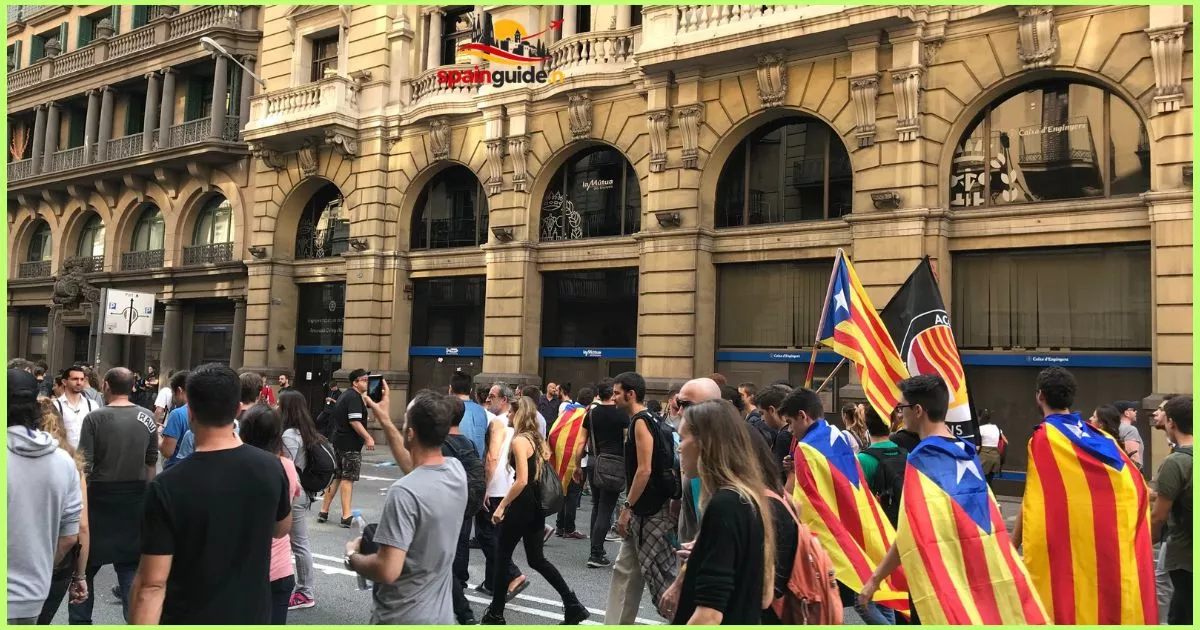
La Diada Nacional de Catalunya is on 11 September, which falls on a Saturday in 2027. It marks the fall of Barcelona in 1714 and has become a day of political and cultural expression. Wreaths are laid at the monument of Rafael Casanova, and large demonstrations have taken place in recent years. As a visitor, you will see the red and yellow Catalan flag everywhere, and many museums and cultural buildings run special programmes. It is a public holiday, so some shops and services may be closed.
Festes de la Mercè in Barcelona
La Mercè is Barcelona’s biggest street festival, celebrated around the feast of Our Lady of Mercy on 24 September. It lasts several days and includes concerts, human towers, parades, giants, fireworks and free events in squares and streets across the city. The official tourism website lists the 2027 dates as still to be confirmed, so it is worth waiting for the programme before booking flights that cannot be changed. If you want to see all of it, plan to arrive for the weekend that includes 24 September.
Highlights include the Piromusical, a fireworks show set to music at the Montjuïc fountains, the correfoc, and the castells in Plaça Sant Jaume. Most events are free, but popular ones get busy, so arrive early.
Santa Tecla in Tarragona
Santa Tecla is the main festival of Tarragona and one of the oldest in Catalunya. It centres on 23 September, the day of Saint Thecla, and usually runs for about ten days. The celebration brings together gegants, a fire bull, Roman-themed parades, castells and a deep sense of local pride. The city’s Roman heritage gives the whole thing a special backdrop, with the amphitheatre and old walls close to the action. Again, confirm the official programme once it is published.
Castells, correfocs and Catalan cultural traditions
September is the best time to see all of the main traditions in one trip. Human towers, known as castells, rise to ten levels high, and the correfoc sends devils with fireworks running through the streets. Brace yourself for noise, sparks, and a lot of smoke. Wear old clothes, cover your hair, and avoid synthetic fabrics. Watching from the side is safer for children and anyone who prefers to stay dry and unburnt.
Catalunya Festivals in October 2027
October is quieter than September but has its own strong identity, with city festivals, harvest events and food traditions.
Fires de Sant Narcís in Girona
The Fires de Sant Narcís are the main festival of Girona, held around the feast day of the city’s patron saint on 29 October. In 2027, that day falls on a Friday. The festival includes concerts, parades, castells, food stalls and a large fairground, and the city fills with families and visitors from the surrounding area. There are also cultural events and exhibitions around the old town. Dates are usually announced a few months before, so confirm with the city council.
Castanyada preparations and autumn food traditions
As the month goes on, bakeries start selling panellets, small almond sweets coated in pine nuts, and street stalls get ready for roasted chestnuts and sweet potatoes. Many people begin to plan their Castanyada gatherings, which are family lunches and parties held around 1 November. It is a good moment to see how food and tradition are tied together in everyday Catalan life.
Harvest fairs, wine events and rural celebrations
Grape harvests wrap up in many wine regions, including Penedès and Priorat, and some wineries hold open days or small festivals. Mushroom foraging begins in the forests. Local fairs celebrate honey, cheese, apples and chestnuts. A weekend drive through the countryside, stopping at wineries and village markets, is one of the nicest ways to spend October.
Catalunya Festivals in November 2027
November is a calm month, and a good time for travellers who enjoy local culture without the crowds.
La Castanyada and All Saints’ Day traditions
La Castanyada is celebrated on the night of 31 October and on 1 November, which is All Saints’ Day and a public holiday. Families eat roasted chestnuts, panellets, sweet potatoes and moscatel wine. Street vendors, called castanyeres, sell hot chestnuts from steaming stalls. In recent years, Halloween has also become popular, especially with children, but the Castanyada is still the traditional favourite. Cemeteries are also visited and decorated with flowers, so it is a time of both memory and celebration.
Fira de Santa Llúcia preparations and seasonal markets
As November ends, the Christmas markets begin. The Fira de Santa Llúcia in Barcelona, next to the cathedral, is one of the oldest Christmas markets in the city and usually opens in late November or early December. Stalls sell nativity figures, trees, decorations and the famous Caga Tió logs. The area around the cathedral starts to glow with lights, and it is a lovely place to wander in the evening.
Mushroom fairs and autumn gastronomy
If you like food, November is a great month. Mushroom fairs take place in forest towns, especially in the Pyrenees and the Montseny area. Restaurants serve rice with wild mushrooms, game stews and seasonal vegetables. Hot chocolate and churros are popular in the cafés, and the cooler weather makes long lunches feel even better.
Catalunya Festivals in December 2027
December in Catalunya is full of lights, markets and some of the quirkiest Christmas customs in Europe.
Christmas markets in Barcelona and Girona
Barcelona’s Fira de Santa Llúcia and the Christmas market at the Sagrada Família are the best known, and they run until Christmas. Girona has its own market in the old town, and many smaller towns hold craft fairs and nativity markets. Streets are decorated, and shops put on festive window displays. Wrap up warm in the evenings, as it can be cold, particularly inland.
Caga Tió: A Much-Loved Catalan Christmas Tradition
The Caga Tió is a smiling wooden log with a face and a red hat. Children feed it small treats in the weeks before Christmas and cover it with a blanket to keep it warm. On Christmas Eve or Christmas Day, they beat it with sticks while singing a song, asking it to produce presents. When the blanket is lifted, the log has, quite literally, dropped sweets and small gifts. It sounds strange to outsiders, but it is much loved here, and you will see little logs on sale in every market.
Els Pastorets, nativity scenes and festive food
Els Pastorets is a traditional play about the shepherds at the nativity, performed in many theatres around the region. Many churches, squares and homes also put up pessebres, or nativity scenes, and some towns hold living nativity events. The Christmas table includes escudella i carn d’olla, canelons on 26 December using the leftover meat, and turrón for dessert. Sant Esteve, 26 December, is a public holiday in Catalunya and a favourite family day.
New Year’s Eve celebrations across Catalunya
On 31 December, Catalans eat twelve grapes at midnight, one for each chime of the clock, for good luck. Barcelona hosts a large celebration near Montjuïc and Plaça d’Espanya, and many towns have their own parties in main squares. Cava flows, red underwear is common, and clubs and restaurants stay open late. If you prefer a quieter evening, book a table at a restaurant well in advance, as New Year’s Eve dinners are very popular.
Five Best Hotels in Catalunya for Festival Visitors
Where you stay can make a big difference during a festival. A central location lets you walk to the events, avoid late-night taxis and slip back to your room when the crowds get too big. We have chosen five hotels in three destinations to cover the main festival areas. This is not a ranking, and you should always check current facilities, exact location, availability and prices before you book.
Hotel Barcelona Catedral, Gothic Quarter, Barcelona
This hotel sits in the old part of the city, close to the cathedral and the narrow streets of the Gothic Quarter. It is a very good base for La Mercè, Sant Jordi and the Three Kings Parade, as most of the main events happen within a short walk. Nearby you can visit Plaça Sant Jaume, the Picasso Museum and the old Jewish quarter. It suits first-time visitors and anyone who loves history and old streets.
Hotel Catalonia Magdalenes, historic centre, Barcelona
Tucked into the old centre, close to Plaça de Catalunya and the Gothic Quarter, this hotel is a comfortable choice for couples and travellers who like a stylish, boutique feel. The rooftop pool is a nice touch after a day on your feet at a parade or a street party. It is within easy reach of the Ramblas, the Born area and the metro, which makes it practical for festival days.
Hotel Catalonia Passeig de Gràcia, Eixample, Barcelona
This hotel is in the Eixample district, near Passeig de Gràcia and a short distance from Plaça de Catalunya. It is a handy base for Sant Jordi, when the book and rose stalls fill the surrounding streets, and for visiting Gràcia during its August festival. Nearby you will find Casa Batlló, La Pedrera, restaurants and shops. It works well for visitors who want to mix festivals, shopping and sightseeing.
Hotels Ultonia Girona, city centre, Girona
In the centre of Girona, this hotel puts you close to the medieval streets, the cathedral and the river. It is the obvious choice if you plan to visit Temps de Flors in May or the Fires de Sant Narcís in October, as many of the events are within walking distance. Photographers, history lovers and spring visitors will enjoy it. Book early for the flower festival, as rooms in the old town sell out fast.
Hotel Astari, near the historic centre, Tarragona
Hotel Astari is a practical option for visitors to Tarragona, especially during Santa Tecla in September. It is close to the old town and the Roman sites, including the amphitheatre and the Roman circus. Tarragona is also a good base for exploring southern Catalunya, including the wine regions, the Ebre Delta and the coast. It suits history lovers and travellers who want something quieter than Barcelona.
The Catalan Traditions Every Festival Visitor Should Know
Knowing a little about the main traditions helps you enjoy the festivals much more. You will see the same things again and again, and each town adds its own twist.
Castellers: Human towers built on trust
Castellers build human towers, with strong people at the base and children climbing to the top. Each group, called a colla, wears matching shirts and wide sashes that support the back. The tower is topped by a small child called the enxaneta, who climbs to the top and raises a hand. Music plays throughout, and the crowd falls silent at the key moments. The practice is on the UNESCO list of Intangible Cultural Heritage, and it is a wonderful thing to watch, whether you are in a major city or a small village.
Gegants and capgrossos: Giants dancing through the streets
Gegants are tall figures, usually representing kings, queens, or historical characters, carried by a person hidden inside. They dance to the sound of pipes and drums. Capgrossos are smaller figures with big heads, which tend to chase children playfully through the crowds. Most towns have their own pairs of giants, and they appear in almost every festa major.
Correfocs: Fire-running processions
The correfoc is a procession of people dressed as devils who run through the streets with fireworks and sparklers. They interact with the crowd, which is invited to run, dance, and get close. It is loud, smoky, and a little chaotic. Wear long sleeves, closed shoes, and a hat, and use common sense. If you would rather not be in the middle of it, stand back near a wall and watch from a distance.
Sardana: The traditional Catalan circle dance
The sardana is a slow, graceful circle dance performed to the music of a cobla, a small band of wind instruments and a double bass. People hold hands, raise them gently and move in time. You often see it on Sunday afternoons in town squares, and anyone can join. It is a gentle contrast to the noise of correfocs and fireworks, and it says a lot about the Catalan sense of community.
Catalan festival food, from calçots to panellets
Food is at the heart of every celebration. Calçots are eaten in winter and early spring, coca de Sant Joan in June, panellets and roast chestnuts in autumn, and turrón and canelons in December. Each festival tends to have its own special dish, and trying it is one of the easiest ways to feel part of the celebration. Ask the locals what to eat, and they will happily tell you, often at length.
Practical Tips for Attending Catalunya Festivals in 2027
A little planning goes a long way. Here are some tips based on how these festivals usually work.
How early to book accommodation
For the most popular events, book as early as you can. La Mercè, Santa Tecla, Sant Jordi weekends, Sitges Carnival and Temps de Flors all attract visitors from outside the area, and rooms in the centre can sell out months ahead. Try to book a room with a free cancellation policy until the official dates are published. For smaller towns, a few weeks ahead is usually enough, but weekends in summer can be busy.
Getting around by train, bus and local transport
Catalunya has a very good train network. The Rodalies commuter trains connect Barcelona with Girona, Tarragona, Sitges, Manresa, Vilanova i la Geltrú and many other towns, and regional buses fill the gaps. Barcelona has an efficient metro, which runs later on weekends and on festival nights. On big days such as Sant Joan, trains and metros get extremely crowded, so travel early and avoid driving into city centres. Parking is hard to find, and some streets are closed to traffic during processions.
What to wear and bring to outdoor celebrations
Comfortable shoes are essential, as you will do a lot of walking and standing. In summer, bring a hat, sunscreen, and a water bottle. For fire festivals, wear long sleeves and natural fabrics. In winter, a warm coat and a scarf help, especially for evening events. A small bag with a phone charger, some cash, and a rain jacket is a good idea. Keep valuables close in crowds, as pickpockets are known to work busy festivals.
Festival etiquette, crowds and family-friendly planning
Most people are welcoming, and visitors are encouraged to join in, but a few simple rules help. Do not walk through a castanet or a sardana circle. Keep your distance from performers. Ask before taking close photos of children. If you have young children, choose daytime events and avoid the late-night fire shows, or find a quiet spot away from the loudest noise. Many events are free, so you can always leave if it gets too much.
Which Catalunya Festival Should You Visit in 2027?
The best festival depends on who you are and what you enjoy.
For families, the Three Kings Parade in January, the Caga Tió in December and the daytime parts of La Mercè are all very child-friendly. Carnival in Vilanova can also be fun for older children.
For couples, Sant Jordi in April is hard to beat, as it is built around romance. Temps de Flors in Girona is another good choice, with beautiful photo spots and plenty of cosy restaurants.
For food lovers, think about a calçotada in winter, the Castanyada in November or a mushroom fair in autumn. Sant Joan in June also gives you a taste of coca and cava.
For music fans, summer is your season. The Grec Festival, Barcelona’s open-air concerts and the festes majors in towns across the region offer a lot of choice. Large international music festivals also take place around Barcelona in late spring and summer.
For travellers interested in Catalan history and culture, September is the one. La Diada, La Mercè and Santa Tecla together give you a real sense of the region’s identity, as well as castells, giants and Roman history.
Frequently Asked Questions About Catalunya Festivals 2027
What is the biggest festival in Catalunya?
La Mercè in Barcelona is generally considered the largest street festival in Catalunya, with hundreds of free events over several days. Santa Tecla in Tarragona, the Festa Major de Gràcia and Sitges Carnival are also very large.
What is the best month to visit Catalunya for festivals?
September is probably the richest month, thanks to La Diada, La Mercè and Santa Tecla. If you prefer flowers and mild weather, May is a strong choice because of Temps de Flors in Girona.
Which Catalan festivals are free?
Most street festivals are free to attend, including La Mercè concerts and parades, Sant Jordi, the Three Kings Parade, castells, correfocs and the Festa Major de Gràcia. Some special concerts, shows and entry to certain buildings may require a ticket. Temps de Flors has some free installations and some that need a ticket, so check the programme.
What is the most traditional festival in Catalunya?
It depends on who you ask, but Sant Jordi, Sant Joan and the local festes majors are all deeply traditional. Berga’s Patum and the human towers are among the oldest and most distinctive customs, and both are recognised by UNESCO.
When is the Girona Flower Festival in 2027?
A festival calendar lists Temps de Flors for 8 to 16 May 2027, while the official tourism information describes it as a nine-day event in May. Dates can change, so confirm with the organisers or the Girona tourist office before you book.
How far in advance should I book a hotel?
For major events like La Mercè, Santa Tecla, Temps de Flors and Sitges Carnival, aim to book three to six months ahead. For smaller festivals, a month or two is usually fine. Choose a flexible rate if you can, because some official dates are not confirmed until closer to the event.
Catalunya rewards people who plan around its calendar. A rose given in April, a courtyard full of flowers in May, a bonfire on the beach in June, and a human tower rising in September are the kind of moments that stay with you long after the trip is over. Pick a month, check the dates, book your room, and get ready to join in.