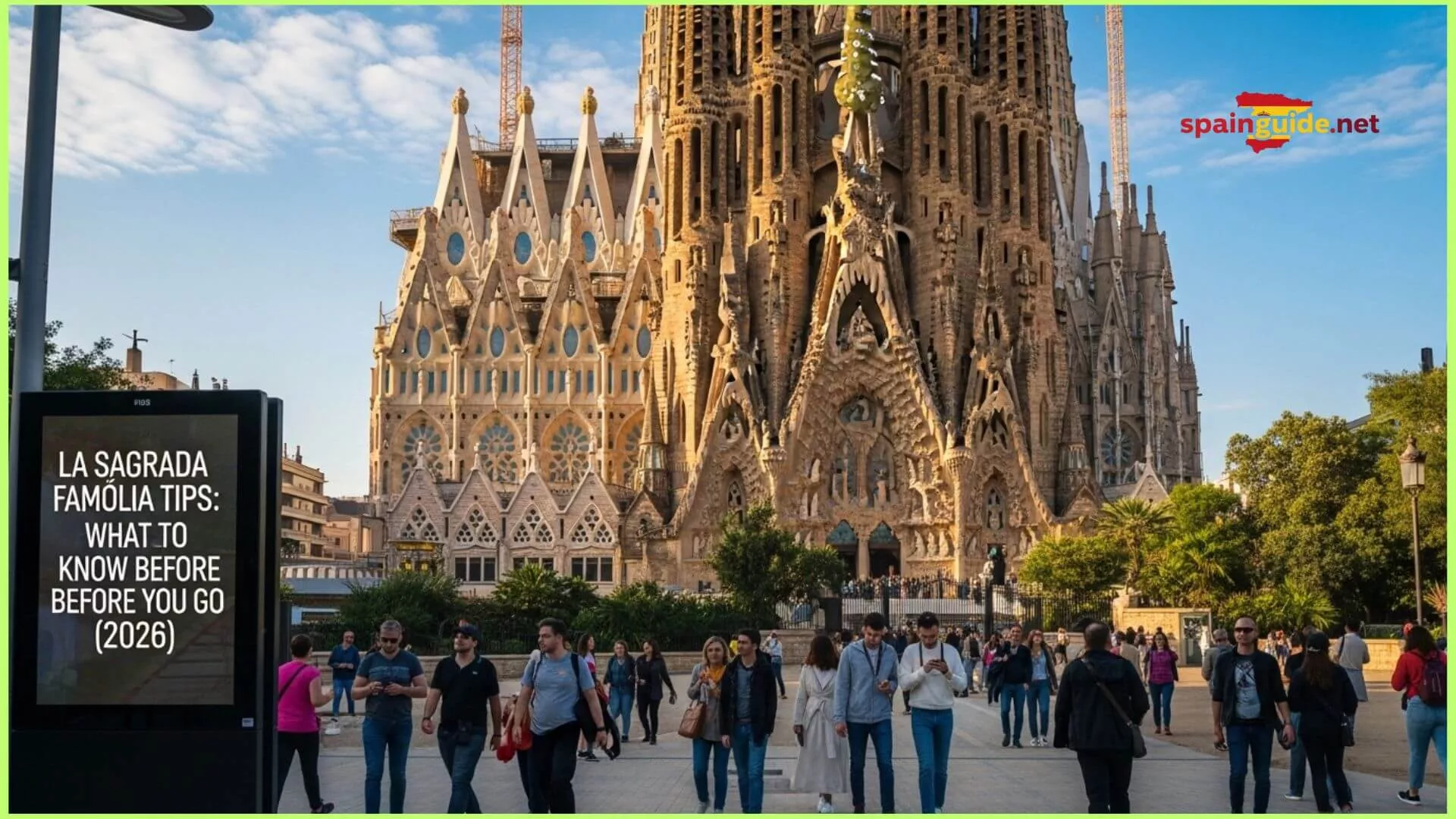
There is a reason millions of people visit the Sagrada Família every year. Even if you have seen hundreds of photographs of it, standing in front of Gaudí’s extraordinary basilica feels completely different.
Construction began in 1882, and the building has remained unfinished for generations. In 2026, the project is expected to reach another major milestone with the completion of the central Jesus Christ tower. The result is a building unlike almost anything else in Barcelona: part church, part work of art, and part architectural story that is still being written.
The Sagrada Família is a UNESCO World Heritage site and a functioning basilica, but you do not need to be an architecture expert to appreciate it. Look closely at the stonework, walk beneath the enormous interior columns, and watch how the light changes across the stained-glass windows.
Whether you are interested in architecture, photography, history, or simply want to see one of Barcelona’s most remarkable landmarks, a little planning will make the experience much better.
Quick Facts
Location: Eixample district, Barcelona
Architect: Antoni Gaudí
Construction started: 1882
Style: Catalan Modernisme
Status: Still under construction, with the main structure planned for completion in 2026
Average visit duration: 1.5–2 hours
Nearest metro: Sagrada Família, L2 and L5
How to Buy Sagrada Família Tickets
Book Online Before You Go
This is probably the most important tip for your visit: book your Sagrada Família tickets in advance.
Tickets can sell out several days ahead, and during the busiest summer periods, popular entry times can disappear even faster. Arriving without a ticket can mean limited availability, a long wait, or having to change your plans altogether.
The official Sagrada Família website is the simplest place to start. You can choose your date and entry time directly instead of relying on unofficial sellers outside the basilica.
Some third-party websites offer guided tours or different cancellation options, but always check exactly what is included before paying. A cheaper-looking ticket is not necessarily the better option if it does not include the access you actually want.
Ticket Types Explained
Basic admission gives you access to the basilica and the museum area. An audio guide can be particularly useful because so much of the building is filled with symbolism, religious references, and details that are easy to miss when you simply walk through.
Guided tours cost more, but they can be worthwhile if you want a deeper explanation of Gaudí’s ideas, the construction history, and the meaning behind the different parts of the building.
Tower access is separate and limited. If you want to climb one of the towers, you normally need to choose between the Nativity façade and the Passion façade when booking.
Because tower access is limited, these tickets can disappear quickly, especially during busy periods.
Which Sagrada Família Tower Should You Choose?
This is one of the biggest decisions when planning your visit, and there is no simple answer because the two towers offer very different experiences.
Nativity Tower
The Nativity façade is on the eastern side of the basilica and focuses on the birth and childhood of Jesus.
It is closely associated with Gaudí’s original work and has a much more detailed and decorative appearance. Plants, animals, religious figures, and intricate stonework cover the façade, giving it a feeling of movement and life.
For visitors interested in Gaudí’s own architectural vision, the Nativity side can be especially fascinating.
Passion Tower
The Passion façade stands on the western side and represents the suffering and death of Jesus.
Its appearance is much more severe. The sculptures are angular and dramatic, creating a strong contrast with the richly decorated Nativity façade.
The Passion Tower also provides impressive views across Barcelona. If seeing the city from above is one of your main reasons for choosing tower access, this side can be particularly appealing.
The climb itself is part of the experience. You take an elevator up, but the descent involves a narrow spiral staircase with roughly 426 steps.
Should You Visit the Towers?
Tower access is not necessarily the right choice for everyone.
The staircases are narrow and can feel intense if you are uncomfortable with heights or enclosed spaces. Families with very young children may also find the experience less convenient, while visitors with mobility difficulties should consider whether the tower route is suitable for them.
If you are mainly interested in Gaudí’s architecture, the basilica itself is already an extraordinary experience. You do not need to climb a tower to appreciate what makes the Sagrada Família special.
Sometimes the most memorable part is simply standing inside, looking upward, and watching sunlight pass through the colored glass.
Best Time to Visit Sagrada Família
When you visit the Sagrada Família can make a noticeable difference. The building changes throughout the day as sunlight moves across the stained glass, columns, and stonework, so timing your visit well can make the experience even more memorable.
Best Time of Day
Morning is a good choice if you want a quieter start. The first entry times tend to be less busy, and the eastern side of the basilica receives softer morning light. The stained-glass windows on the Nativity side are especially beautiful at this time, with cooler shades of blue and green filling the interior.
Midday is usually the busiest period. Tour groups arrive throughout the day, and the interior can feel much more crowded. If you have flexibility, choosing an earlier or later entry can make it easier to take your time.
Late afternoon can be particularly beautiful. As the sun moves toward the west, warm light enters through the Passion-side windows, filling parts of the basilica with golden, orange, and red tones. The atmosphere can change noticeably within a short time.
If photography and interior light are important to you, late afternoon is worth considering.
Best Months to Visit
January to March and parts of November to February are generally quieter periods, although the weather outside is cooler. Fewer visitors can make it easier to explore the basilica at your own pace.
April to May and October to November can offer a useful balance between comfortable weather and manageable visitor numbers.
June to September is the main summer period and usually brings larger crowds. Tickets can sell out further in advance, particularly around popular entry times. The advantage is longer daylight, which gives you more opportunities to experience the changing light inside.
There is no single perfect month. If your priority is a quieter visit, consider the less busy periods. If you want warm weather and long days in Barcelona, summer can work well as long as you plan ahead.
Best Day of the Week
Weekdays are generally preferable to weekends if you want to avoid some of the heaviest visitor traffic.
Tuesday, Wednesday, and Thursday can be good choices, particularly when combined with an early or late entry time. Visitor numbers still vary throughout the year, so booking a specific time in advance remains important.
How to Avoid the Biggest Crowds
One simple strategy is to choose one of the first entry times of the day. You can begin your visit before the basilica becomes as busy as it tends to be later.
Another option is to visit in the late afternoon, when some organized groups have already finished their visits.
Pay close attention to your ticket details. If you have tower access, the tower entry time may be different from your general admission time. Arriving late can mean missing that specific slot.
A useful approach is to visit the tower first and then take your time exploring the basilica afterward. By the time you return to the main interior, the light may have changed, giving the building a completely different atmosphere.
What to See Inside Sagrada Família
There is a lot to notice inside the basilica, but a few details deserve special attention.
The Interior Columns
One of Gaudí’s most remarkable ideas was to design the columns so they resemble trees branching toward the ceiling.
Standing beneath them can feel almost like being inside a stone forest. The columns are not simply decorative. Their shapes help support the enormous structure while giving the interior its distinctive organic character.
Look upward when you enter. The ceiling is easy to miss if you spend the whole visit looking straight ahead.
The Stained-Glass Windows
The stained glass is one of the highlights of the Sagrada Família.
Morning light tends to emphasize cooler blues and greens, while later sunlight can bring warmer yellows, oranges, and reds into the interior. As the sun moves, the colors shift across the floors and columns.
This is one reason why returning visitors can experience the same building in a completely different way.
Nativity Façade Details
The Nativity façade is filled with plants, animals, religious figures, and detailed carvings.
Much of this work is connected directly to Gaudí’s original vision, and the façade has a lively, almost organic quality. Spend a few minutes looking closely rather than simply taking a photograph and moving on.
The small details often tell as much of the story as the larger sculptures.
Passion Façade Symbolism
The Passion façade has a completely different character.
Its angular forms and restrained appearance were designed to represent the suffering and death of Christ. Sculptor Josep Maria Subirachs created the figures with a deliberately stark style.
The contrast between the Nativity and Passion façades is one of the most interesting aspects of the building. They belong to the same basilica but communicate very different moods.
The Gaudí Museum and Crypt
The museum area provides more context about Gaudí and the construction of the Sagrada Família.
Original drawings, models, and information about the architect’s ideas help explain how the building developed over time. If you have an interest in architecture, this section is well worth allowing extra time for.
Understanding how Gaudí approached the project can make the basilica itself easier to appreciate.
Sagrada Família Dress Code and Rules
The Sagrada Família is an active Catholic basilica, so visitors are expected to dress appropriately.
As a general guide:
- Shoulders should be covered.
- Shorts and skirts should reach at least around the knee.
- Transparent or see-through clothing is not appropriate.
- Swimwear and beachwear are not allowed.
- Hats should be removed inside where required.
- Clothing associated with promotional, political, or party activities is not permitted.
In summer, lightweight clothing can help with the Barcelona heat. If your outfit leaves your shoulders uncovered, carrying a light cardigan or shawl can be useful.
Comfortable shoes are also important, especially if you plan to visit one of the towers.
Security screening takes place at the entrance, and large bags may not be accepted. Check the current visitor rules before your trip if you are carrying luggage or larger equipment.
Sagrada Família Photography Tips
The Sagrada Família offers plenty of opportunities for photography, but the best approach depends on the light.
For interior photography, late afternoon can produce warm tones through the western stained-glass windows. Morning offers cooler colors and can also provide a quieter atmosphere.
For façade photographs, Plaça de Gaudí, across from the Nativity façade, offers some excellent viewpoints. Depending on conditions, the reflection pool can create a particularly attractive composition.
For camera equipment, a wide-angle lens can be useful because the interior is enormous and there is often limited space to step backward. A camera with good low-light performance can also help.
Tripods are generally not practical inside, so handheld photography is the better approach.
For natural light on the exterior sculptures, remember the basic direction: the Nativity façade faces east, while the Passion façade faces west. This means morning and afternoon offer very different conditions.
How Long Do You Need at Sagrada Família?
Your ideal visit depends on how deeply you want to explore.
Quick visit: Around 1 hour for a basic visit without tower access.
Normal visit: Around 2 hours gives you enough time for the basilica, museum area, and the main architectural details without rushing.
Architecture and photography lovers: Allow 3 hours or more if you want tower access, photography time, and a slower look at the details.
For most first-time visitors, around two hours is a comfortable starting point.
Accessibility and Visiting with Children
The main basilica is designed to accommodate visitors with accessibility needs, although tower access is more restricted because of the narrow spiral staircases.
Towers
Elevators are used for the ascent, but visitors walk down via the spiral staircases. The stairs are narrow and may not be suitable for visitors with mobility difficulties or anyone uncomfortable in enclosed spaces.
Strollers
Strollers can be used in the main basilica, although visitors should follow staff instructions and accessibility arrangements during busy periods.
Visiting with Kids
Children can enjoy the changing colors of the stained glass and the unusual shapes of the columns and ceiling.
However, a long architectural visit may be tiring for younger children. Around two hours can feel like a lot, so consider keeping the pace relaxed and allowing time for breaks afterward.
Wheelchair Access
The main basilica is accessible, but tower access has limitations because of the stairs involved.
Restrooms and Facilities
Facilities are available, although queues can become longer during busy periods.
Nearby Things to Do
Your Sagrada Família visit can easily be combined with a few nearby attractions.
Hospital de Sant Pau
Hospital de Sant Pau is a short walk along Avinguda de Gaudí. It is another important example of Catalan Modernisme and forms a natural pairing with the Sagrada Família.
Avinguda de Gaudí
Avinguda de Gaudí is a pleasant pedestrian boulevard connecting the Sagrada Família area with Hospital de Sant Pau.
It is a simple walk, but it gives you a chance to slow down between two major sights rather than spending the whole day moving between crowded attractions.
Glòries
Glòries is another nearby area where you can take a break and spend some time outdoors.
Park Güell
Park Güell is farther away, but it can be included in a wider Gaudí-themed day. Public transport is a better option than trying to walk between the two attractions.
Common Sagrada Família Mistakes
- Waiting until the last minute to buy tickets instead of booking ahead.
- Choosing the busiest time of day when a quieter entry would suit you better.
- Ignoring the audio guide and missing some of the symbolism behind the building.
- Choosing a tower without considering what you actually want to see.
- Not thinking about the direction of the sunlight if photography is important to you.
- Arriving in unsuitable clothing and discovering that you cannot enter.
- Bringing a large backpack or luggage without checking the current security rules.
- Allowing too little time and rushing through a building that deserves a slower visit.
Is Sagrada Família Worth Visiting 2027?
The Sagrada Família remains one of Barcelona’s defining landmarks, and 2026 is a particularly interesting year in its long construction story.
The planned completion of the central Jesus Christ tower represents a major milestone for the basilica. At its planned height of 172.5 metres, it will become the tallest structure in Barcelona.
However, the wider project is not simply a story of one completion date. Further decorative and architectural work is expected beyond 2026.
That ongoing process is part of what makes the Sagrada Família unusual. Visitors are not simply looking at a finished historic monument. They are seeing a building that has been evolving for generations.
Frequently Asked Questions
Can you enter Sagrada Família without a ticket?
Visitors generally need a valid admission ticket for tourist visits, with entry assigned to a specific time. Booking in advance is recommended, especially during busy periods.
How strict is the Sagrada Família dress code?
The basilica expects visitors to dress appropriately for a religious site. Shoulders and knees should be covered, and beachwear, swimwear, and transparent clothing are not appropriate.
Can you bring bags into Sagrada Família?
Small bags are generally more practical, while larger luggage and oversized bags may not be accepted. Security screening takes place at the entrance.
Which Sagrada Família tower is better?
The two towers offer different experiences. The Nativity side is closely associated with Gaudí’s original work and detailed decoration, while the Passion side has a more dramatic appearance and offers impressive views of Barcelona.
Is Sagrada Família free on Sundays?
Regular tourist admission is not generally free on Sundays. Visitors should check the official website for current ticket types, special arrangements, and religious services.
Can you attend Mass at Sagrada Família?
Yes. The Sagrada Família is a functioning basilica and holds religious services. Mass attendance follows different arrangements from standard tourist visits, so check the official schedule before going.
Final Tips for Visiting Sagrada Família
- Book your ticket in advance, particularly during summer.
- Choose your entry time carefully if lighting or photography matters to you.
- Consider late afternoon for warmer interior light.
- Choose your tower based on the experience you want, rather than simply choosing the most popular option.
- Allow around two hours for a comfortable first visit.
- Dress appropriately because this is a working basilica, not simply a tourist attraction.
- Check bag and security rules before arriving.
- Consider visiting Hospital de Sant Pau afterward for another beautiful example of Barcelona’s Modernisme.
The Sagrada Família is more than a church rising above the Barcelona skyline. It is a story carved into stone, glass, and light, built across generations and still changing with time.
Give yourself enough time to look beyond the famous towers. Notice the branches of the columns, the changing colors on the floor, the small figures hidden among the façades, and the quiet moments between the crowds.
That is when the building begins to feel less like a landmark you came to photograph and more like a place you have actually experienced.